Your tyre pressure light is on. Or you noticed the tyre going flat overnight, even though the rubber looks fine. Nine times out of ten in London traffic, the culprit is not the tyre itself; it’s a small, overlooked component called the valve. A worn or cracked valve stem leaks air slowly and constantly, and most drivers do not realise they need a tyre valve replacement until the problem becomes a flat at the worst possible moment.
At RH Mobile Tyre, we provide tyre valve replacement across London, including the Central, North, South, East, and West zones. We come to your home, your workplace, or wherever you are parked; no garage visit required.
What Is a Tyre Valve and Why Does It Fail?
The valve stem is the small rubber or metal fitting on your wheel rim. It is what you use every time you check or add tyre pressure. Rubber valves are the most common type on standard cars. Over two to three years of London driving potholes, kerb clips, road salt in winter, heat in summer, they crack, harden, and lose their seal.
Metal TPMS (Tyre Pressure Monitoring System) valves are more complex. They contain a sensor that reports tyre pressure to your dashboard. When a TPMS valve fails, your warning light stays on even after you re-inflate the tyre. The sensor itself may be fine; it is often just the rubber seal or the valve core that has gone.
Common signs you need a tyre valve replacement:
- The tyre loses pressure slowly over several days
- Your TPMS warning light will not clear after inflating
- You can hear or feel a faint hiss near the valve when you press the tyre cap area
- The rubber at the base of the valve looks cracked or discoloured
- The tyre deflated after a recent tyre fit (valves are often not replaced alongside new tyres elsewhere)
A faulty valve is not something to drive on indefinitely. Under-inflated tyres wear unevenly, reduce fuel efficiency, and can fail at motorway speeds. The DVSA guidance on tyre safety is clear: tyre pressure is a legal and safety requirement.
Our Tyre Valve Replacement Service: How It Works
We keep this simple. There is no garage to drive to, no waiting room, and no inflated labour charges.
Step 1: Book online or call us
Please tell us your location (postcode, street, or landmark), your vehicle make and model, and what you are experiencing. Postcodes we regularly cover include SW1, SE1, E1, N1, W1, WC1, EC1, NW1, BR1, CR0, HA0, UB4, RM1, EN1, and surrounding areas.
Step 2: We confirm and dispatch
Our mobile tyre fitter is sent to your location with the correct valve type for your vehicle. Most bookings in London are fulfilled the same day.
Step 3: On-site valve replacement
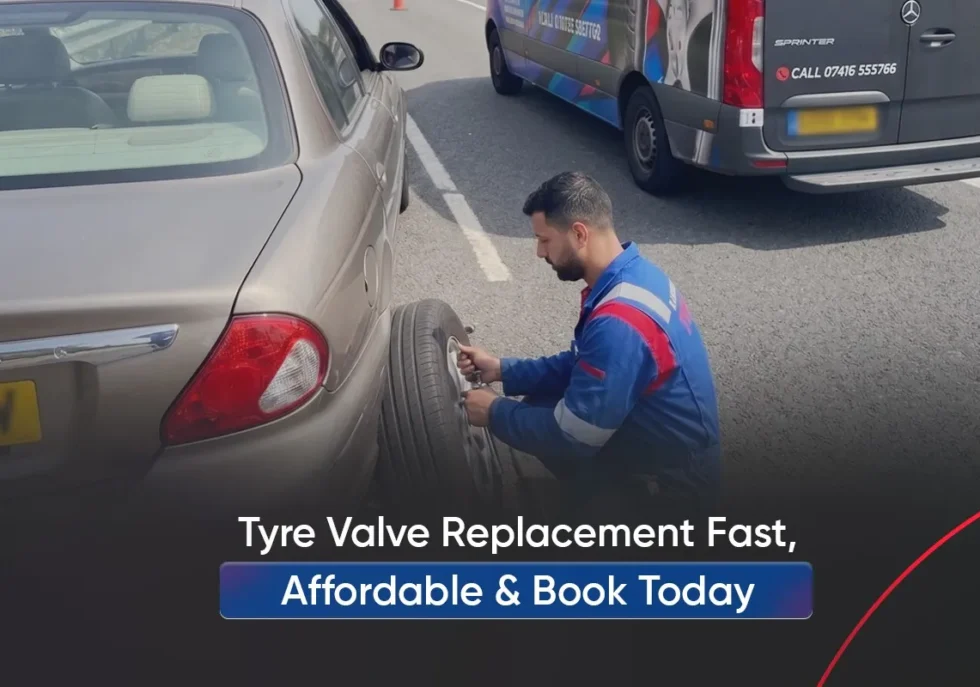
We remove the old valve, fit a new one, re-inflate to the correct PSI for your vehicle, and carry out a visual check on the surrounding tyre and rim. For TPMS valves, we also check that the sensor is reading correctly before we leave.
Step 4: Done. You drive away safely
The whole job typically takes 20 to 30 minutes on-site. No tow truck. No garage queue.
If you also need a full mobile tyre fitting in London, we can combine both jobs into a single visit, saving you time and avoiding a repeat call-out.
Valve Types We Replace
| Valve Type | Typical Vehicle | Replacement Time | Notes |
|---|---|---|---|
| Standard rubber snap-in valve | Most cars and hatchbacks | 15 mins | Replaced with every tyre change |
| Metal clamp-in valve | Performance cars, alloy wheels | 20 mins | More durable than rubber |
| TPMS rubber valve (with sensor) | Most cars made after 2012 | 25-30 mins | Seal and core replaced; sensor retained if undamaged |
| TPMS metal valve | Premium and newer vehicles | 25-30 mins | Full valve stem replaced; sensor reprogrammed if needed |
If your vehicle is post-2014, it almost certainly has TPMS. If you are unsure which type you have, just tell us your registration when you book, and we will check it for you.
Why London Drivers Choose RH Mobile Tyre
You could book with a national chain. Some drivers do. But there are a few reasons a London-based mobile service works better for most people in this city.
Getting to a tyre garage in London during the working week means either losing half a morning or leaving the car there all day. With a mobile service, the fitter comes to you, your driveway in Barnet, your car park near Canary Wharf, or a side street in Clapham. You carry on with your day.
We also do not upsell. If the valve only needs a new core, that is what we replace. If the whole stem needs to come out, we tell you why before doing it. No surprises on the invoice.
Our fitters are experienced with all common UK vehicle types — Fords, Vauxhalls, VWs, BMWs, Audis, SUVs and light vans. We carry rubber and metal valve kits as standard on every van, so we are not guessing when we arrive.
One of our regulars, a delivery driver based near Stratford, told us he had been to three different garages over two weeks trying to get his TPMS light to clear. They kept rebalancing the tyres. We came out, replaced the valve seal on the offside front, re-inflated to spec, and the light cleared before we packed the kit away. Twenty-five minutes on his street. He has not been back to a garage for tyres since. Call Us Now for a Same-Day Tyre Valve Replacement.
What If the Problem Is More Than Just the Valve?
Sometimes a slow puncture is exactly that: a nail or screw in the tread rather than a valve issue. We check for both when we arrive. If a mobile puncture repair is possible under BS AU 159 standards, we will carry it out on-site. If the tyre is too damaged to repair safely, we carry replacement tyres on our vans and can fit new rubber in the same visit.
In an emergency, a blowout, a flat on a dual carriageway, or a tyre gone during a late-night journey, our 24/7 emergency tyre service covers London around the clock. Valve failures at pressure can cause sudden deflation, particularly on older rubber valves in hot weather, so do not leave a cracked valve until it becomes a roadside emergency.
What Does Tyre Valve Replacement Cost in London?
Standard rubber valve replacement costs between £5 and £10 per tyre at most garages. For a mobile service, there is a call-out element, but many customers combine valve replacement with a tyre fitting or puncture repair, which brings the overall cost well below a main dealer visit.
TPMS valve servicing (seal and core replacement) typically runs £25 to £45 per wheel depending on valve type and vehicle. Full TPMS sensor replacement where the electronic unit itself has failed is a separate, higher-cost job and requires manufacturer-specific diagnostic equipment. We are clear about what you need before we book anything.
We do not charge hidden extras. What we quote is what you pay.
Tyre Valve Replacement Near Me London Coverage
We cover all London boroughs and surrounding areas. Whether you are searching for tyre valve replacement near you from Enfield in the north, Croydon in the south, Romford in the east, or Hayes in the west, we can reach you. Regular areas include:
North: N1, N4, N7, N16, N22 Islington, Finsbury Park, Tottenham, Wood Green South: SE1, SE15, SE22, SW2, SW9, SW17 Bermondsey, Peckham, Dulwich, Brixton, Tooting East: E1, E3, E10, E14, E17 Whitechapel, Bow, Leyton, Canary Wharf, Walthamstow West: W3, W5, W12, W14 Acton, Ealing, Shepherd’s Bush, West Kensington Outer zones: RM, EN, HA, UB, BR, CR, KT postcode areas
Voice search tip: if you have asked your phone “where can I get a tyre valve replaced near me in London”, you have found the right place.
If you are also dealing with worn tread and are wondering when to replace a tyre based on tread depth, that guide covers the UK legal limit and practical warning signs in plain terms.
FAQs
Can I drive to get my tyre valve replaced, or is it unsafe?
It depends on how much pressure the tyre has already lost. If the tyre is still at or above 20 PSI and the leak is slow, short low-speed driving is generally possible, but you should check the pressure before setting off and avoid motorways or dual carriageways. If the tyre is visibly soft or flat, driving on it risks damaging the sidewall and the wheel rim, which turns a simple tyre valve replacement job into a full tyre replacement. The safer option is a mobile service that comes to wherever the car is parked, so you do not have to drive at all.
Does tyre valve replacement affect wheel balancing?
A standard rubber snap-in valve weighs so little that replacing it does not affect wheel balance in any measurable way. Metal clamp-in valves and TPMS valve assemblies are slightly heavier, but a skilled technician accounts for this during fitting. If your wheels were balanced recently and the valve is the only thing being changed, you do not need a rebalance. However, if the tyre valve replacement is being done alongside new tyres or a puncture repair, a wheel balance check at the same visit is worth doing, as it takes only a few minutes and rules out any vibration at motorway speed.
My TPMS light came on after a tyre was recently fitted elsewhere. Could the valve be the reason?
Yes, this is one of the most common complaints London drivers raise. Many budget garages and fast-fit chains replace the tyre but reuse the old TPMS valve or forget to reset the sensor after fitting. The result is a warning light that stays on despite correct tyre pressure. In most cases the fix is a tyre valve replacement on the affected wheel, specifically replacing the valve seal, core, and nut kit, followed by a TPMS reset. This does not require expensive diagnostic equipment for most standard vehicles. If you had a tyre fitted recently and the light appeared within days, that is almost certainly the cause.
How long does a tyre valve last, and is there a recommended replacement schedule?
Rubber snap-in valves are typically reliable for three to five years before the rubber starts to harden and lose its seal. In London, where road salt is used heavily in winter and kerb strikes are common, the practical lifespan is often closer to three years. Metal clamp-in valves last longer but the rubber seal inside them still degrades at a similar rate. TPMS valve hardware, including seals, cores, and cap nuts, should be serviced every time a tyre is changed rather than just when a fault appears, because the cost of the service kit is minimal compared to the sensor replacement you face if corrosion gets into the valve body. A good rule: if your tyres are more than three years old and you have never had a tyre valve replacement, treat it as overdue.
Do Not Leave a Failing Valve Too Long
A cracked valve does not fix itself. The longer it leaks, the more the tyre pressure drops below the safe threshold. You end up with accelerated tyre wear on the inner shoulder, reduced braking distance, and higher fuel bills, all from a part that costs a few pounds to replace. If you have recently noticed your tyre going flat with no visible puncture, the valve is the first thing to check.
We cover London seven days a week. Same-day slots are available on most days. Just tell us your postcode, vehicle, and the issue; we will handle the rest.